
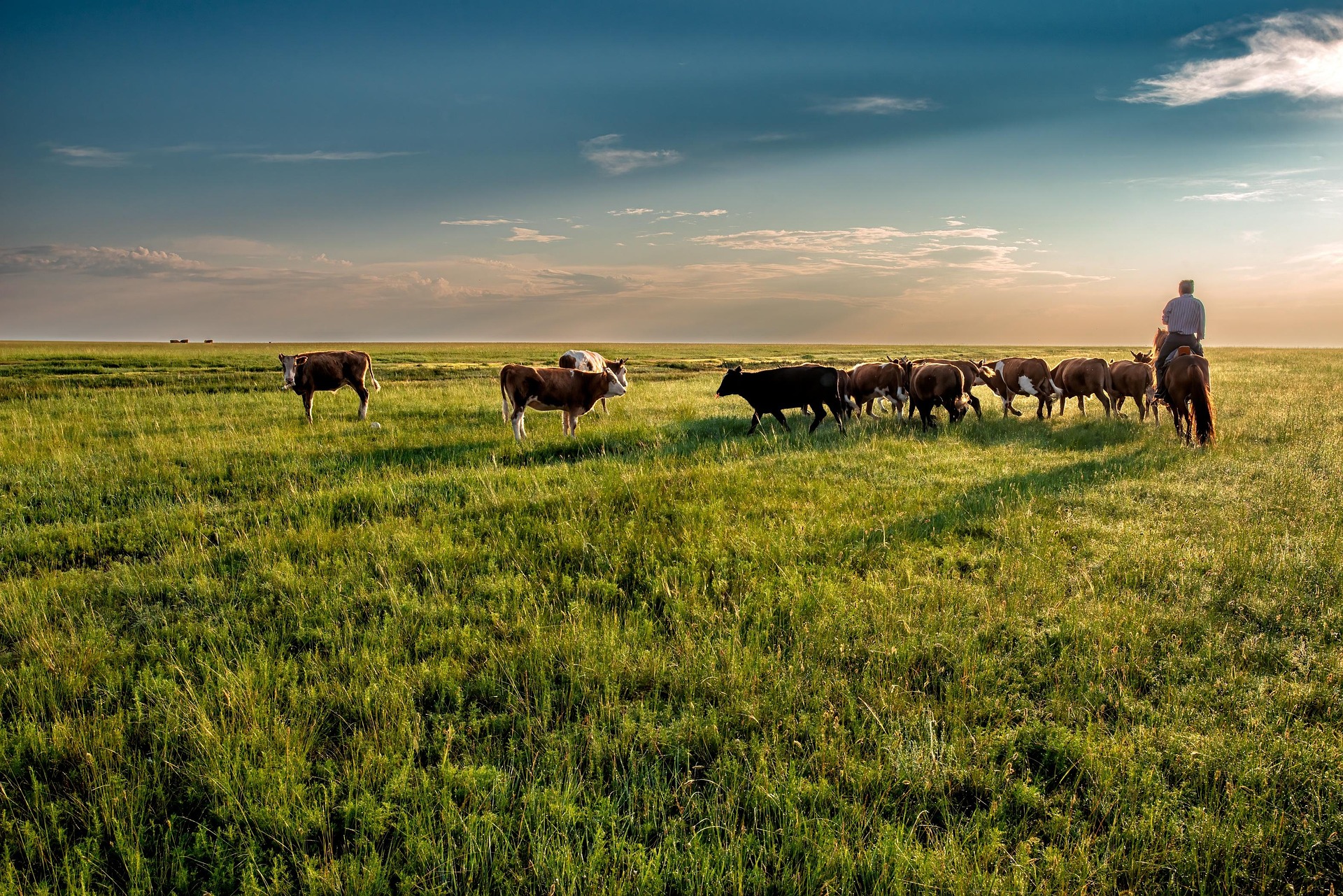
Across South Africa’s communal rangelands, degraded grasslands are often viewed as the consequence of too many cattle, too little grazing control and declining soil health. Now, a growing restoration programme is testing whether better-managed livestock could help repair the damage, while generating income through carbon credits.
Improved grazing can increase vegetation cover, strengthen soils and improve livestock production, while encouraging carbon to accumulate below ground. If those gains can be measured with sufficient confidence, they may generate carbon credits that help pay for restoration and support rural livelihoods.
But the science is far from straightforward. Soil carbon changes slowly, varies from place to place, and is one of the most difficult components of terrestrial ecosystems to measure accurately.1
Those ideas are now being explored through the Grassland Restoration and Stewardship in South Africa (GRASS) project. Developed by The African Stove Company (TASC), together with Meat Naturally Africa and other partners, the programme combines improved grazing management, fire management, livestock health and community governance to restore communal rangelands, while generating verified carbon credits.
During the first monitoring period, the project issued more than 266,000 Climate, Community and Biodiversity-labelled carbon credits across 95,364 hectares. It now works with more than 10,000 farmers in 180 grazing associations, and aims to expand to 2 million hectares by 2030.
Carbon below the surface
Soil carbon is often described as an invisible climate solution. As vegetation recovers, more carbon enters the soil through roots and decaying plant material, improving soil structure, reducing erosion and increasing water filtration. Yet, soils do not continue storing carbon indefinitely. Over time, they approach a new equilibrium, where gains become progressively smaller.
"Changing grazing management can surely help to increase soil organic carbon,” says Angelinus Franke, a rangeland and soil scientist at the University of the Free State, South Africa. But how much carbon accumulates depends on factors including soil type, rainfall and temperature. Clay-rich soils generally have greater storage potential than sandy soils, while wetter grasslands produce more vegetation, and therefore more carbon input into soil than arid landscapes.
Warmer temperatures, meanwhile, accelerate the microbial processes that break down organic matter.
The result is that no single estimate applies everywhere. Grasslands in the Free State may respond differently from those in the Karoo or Kalahari. Ironically, some of the greatest opportunities may lie in degraded landscapes where years of continuous grazing have depleted vegetation and soil carbon, leaving more room for recovery.
Restoring these landscapes, however, depends as much on people as on ecology.
Communities at the centre
Franke says communal grazing requires collective decisions about where livestock move, when grazing areas are rested and how fires are managed. Without community agreement, even the best-designed grazing plans are unlikely to succeed.
That principle sits at the centre of the GRASS model. Participating farmers work through grazing associations supported by locally-trained EcoRangers, who help monitor veld condition, implement grazing plans, improve livestock health and manage invasive plants and fire.
The project also aims to strengthen farmers’ livelihoods. Through Meat Naturally Africa, participating communities gain access to veterinary support, mobile auctions and formal livestock markets. Sarah Frazee, one of the organisation’s founders, says many farmers join because they see immediate benefits through healthier animals and better market access, rather than future carbon income.
In some communities, she says, livestock sales have exceeded the equivalent of US$60,000 in a single auction day after years of struggling to reach formal markets. That matters because restoration projects rarely succeed when ecological goals are separated from local incentives. If improved grazing also improves incomes, communities have a stronger reason to maintain the practices that benefit the landscape.
Measuring the benefits
The challenge is demonstrating that healthier grasslands are genuinely storing more carbon, and not simply appearing greener after favourable rainfall.
Rather than relying on repeated soil sampling across the full project area, GRASS combines field measurements with the SNAPGRAZE biogeochemical model, which estimates long-term changes in soil carbon using data on rainfall, temperature, fire frequency, soil type, livestock numbers and grazing intensity. Shelley Estcourt, chief executive of TASC Africa, explains that soil samples collected from the project sites are then used to calibrate and verify the model over time.Franke agrees that soil carbon models are often needed, but warns that measurement remains difficult. Changes occur slowly and must be detected against the much larger carbon stock already present in the soil. Small differences in soil sampling or laboratory analysis can translate into substantial uncertainty, while favourable rainfall may temporarily improve vegetation even where management practices have changed little.
“To assess structural changes in soil organic carbon, five years is an absolute minimum, but 10 to 20 years is better,” he says.
More than carbon
In the GRASS model, once credits are independently verified part of the revenue is channelled back to participating communities through Meat Naturally Africa. Frazee says each association decides collectively how the funds will be used, with investments ranging from livestock health and EcoRanger support, to school uniforms, school fees and community facilities. Carbon finance, she explains, is designed to not only provide another source of income, but to strengthen the systems that make long-term restoration possible.
The wider role of carbon markets, however, remains contested. Franke believes land-based carbon credits can make a valuable contribution to restoring degraded ecosystems, but cautions against expecting too much from the carbon credits alone.
“All actors involved in the carbon credit chain have an interest in reporting high carbon sequestration rates,” he says. “The risk of overly optimistic reporting of carbon sequestration is high, even when all protocols for estimating carbon sequestration are followed.”
Carbon should never become the only measure of success, Franke asserts.
“Vegetation type, biodiversity, productivity, soil cover and water quality can be easier to assess than soil carbon,” he says. Restored rangelands should also show improved vegetation cover, lower erosion, better water infiltration, greater drought resilience, healthier animals and improved farmer income. As the United Nations marks the International Year of Rangelands and Pastoralists 2026, South Africa’s communal grasslands are becoming a test case for the broader question of whether carbon finance can support long-term ecological restoration, without reducing complex landscapes to carbon ledgers..
References
Kotzé, E., Paulse-Ross, J., Malan, P. J. et al. Plant Soil (2025). https://doi.org/10.1007/s11104-025-07583-4