
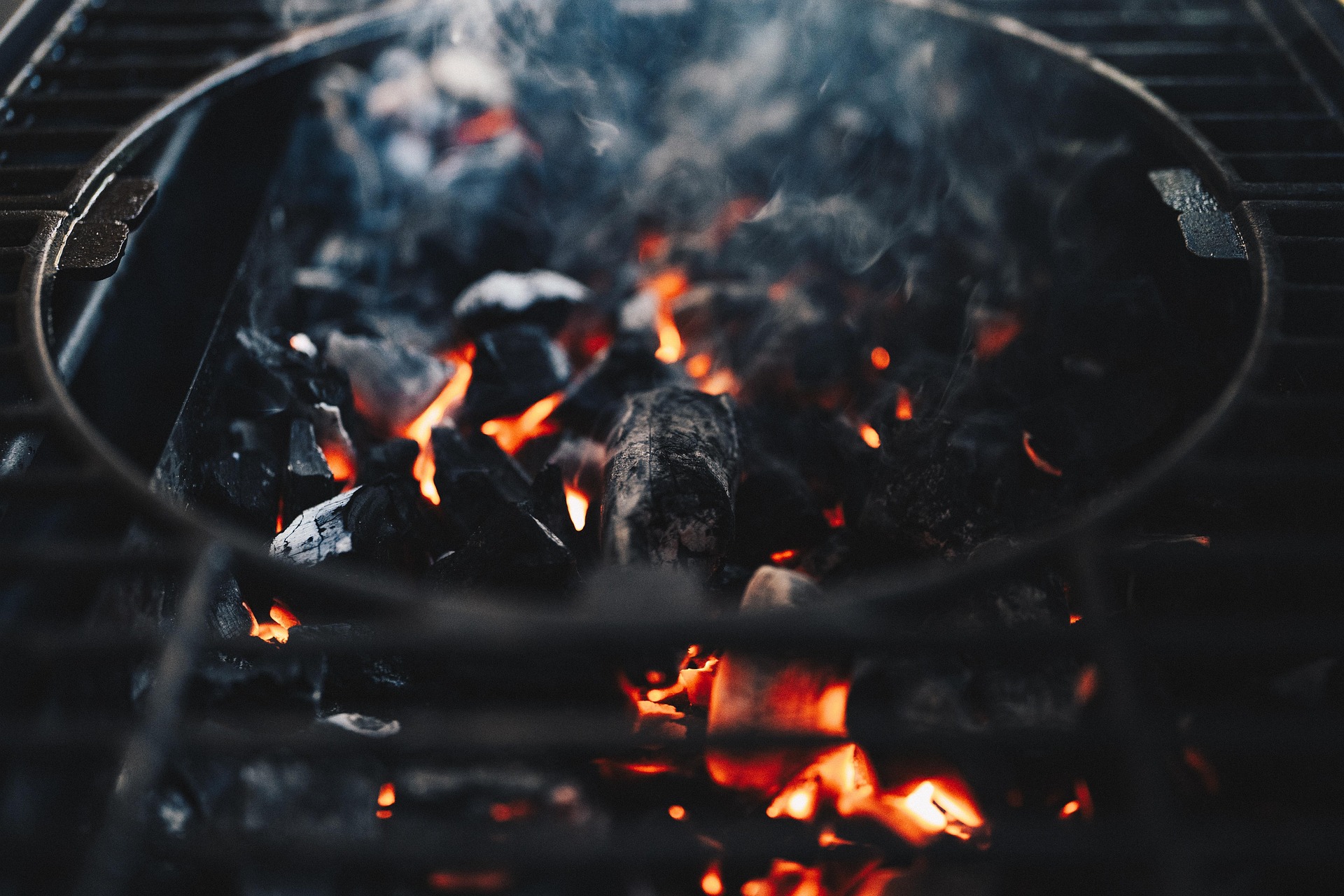
The tunnel erupts in a flash of flame and pressure. The explosion lasts barely seconds, recreating one of mining’s most destructive hazards under carefully controlled conditions.
At the Council for Scientific and Industrial Research’s (CSIR) Kloppersbos fire and explosion testing facility, north of Pretoria, researchers deliberately ignite methane and finely-milled coal dust to understand how mine explosions unfold, and how they can be prevented.
The work has taken on renewed significance as South Africa navigates its transition away from coal. Although production is expected to decline over time, the hazards associated with coal mining do not disappear when a mine closes.
Before the blast
Reaching Kloppersbos requires an almost two-hour drive from Johannesburg, ending on a punishing dirt track pitted with deep potholes and pools of standing water. The isolated setting offers little hint of what lies ahead.
Inside the facility, technical assistant Jabulani Mbonani begins not with an explosion, but with the physics of coal itself.
At Kloppersbos, Mbonani explains, coal becomes dust, dust becomes data, and the data becomes a warning.
Researchers first determine whether the dust can explode, how easily it ignites, and the concentration at which it becomes hazardous when suspended in air. Too little dust and there is insufficient fuel. Too much and oxygen becomes limiting. Between these thresholds lies the unstable range where coal dust becomes a potentially explosive cloud.
Later, the demonstration moves to the test gallery.
Around 144 kilograms of prepared coal dust are spread along the gallery floor. At the closed end of the tunnel, an electrical igniter triggers a methane-air mixture. Sensors and high-speed cameras wait to measure flame, pressure and speed.
Then the tunnel erupts.
The blast is over almost instantly. A flash of flame. A wave of pressure. For a brief moment, the carefully controlled experiment offers a glimpse of what such an explosion would mean deep underground, where confined tunnels amplify its destructive force.
The demonstration leaves little doubt about the power stored in something as seemingly harmless as coal dust.
Five ingredients for disaster
Riaan Bergh, impact area manager for mining testing and training at the CSIR, says research into coal dust explosions remains essential because coal will continue to play a role in South Africa’s energy landscape for years to come.
“As long as we continue mining coal,” he says, “there will be the risk of devastating coal dust explosions that must be properly understood and managed.”
The science is often explained through the dust explosion pentagon. Five conditions are needed for a combustible dust explosion: fuel, oxygen, dispersion, an ignition source and confinement. Remove any of them and an explosion cannot occur. Allow all five to coincide in an underground mine, however, and the result can be catastrophic.
Recent modelling studies suggest that interactions between methane and coal dust can significantly increase explosion pressures in mine roadways, depending on methane concentrations, oxygen availability and the amount of suspended and dust.1 But Bergh says computer simulations must always be validated against large-scale experiments.
“The translation from laboratory-scale results to large-scale, real-world environments has to be demonstrated,” he stresses.
Hazards that outlive mining
For Isaac Mthombeni, who works in the Kloppersbos test gallery, the demonstration is about more than the physics of an explosion. It is about memory, and ensuring that those who witness the blast never underestimate the risks posed by coal dust and methane.
Mine closures and energy transition are often discussed in terms of jobs, economics and climate change. Yet, active and abandoned coal mines can continue to harbour methane, coal dust and zones of spontaneous combustion long after production has ceased.
In active mines, explosion prevention depends on ventilation to dilute methane, continuous gas monitoring, and, where necessary, inert stone dusting. A mine does not become safe simply because production has stopped. Hazards can remain in old workings, residual dust, methane pockets and abandoned infrastructure. South Africa’s Mine Health and Safety Amendment Bill, introduced to Parliament in 2026, seeks to strengthen employer accountability, enforcement and penalties under the country’s mine health and safety framework.
Methane is a greenhouse gas, but looking at it solely through the lens of climate change overlooks the risks it poses below ground. Looking at it only as a mine safety issue, meanwhile, obscures its broader role in transition finance, mine closure and future liability.
At Kloppersbos, the explosion is over in an instant. The air clears almost as quickly, but the lesson is intended to linger. Preventing disaster depends on countless systems working together – ventilation, monitoring, stone dusting and rigorous testing – long before a spark ever reaches the coal dust.
Coal may be disappearing slowly from South Africa’s future. But in the tunnels it leaves behind, it still has heat, pressure and memory.