
For every dollar budgeted for climate action in 2026, 54 vulnerable countries collectively allocated almost $25 to debt repayments. An ActionAid report traces how borrowing to recover can leave communities exposed to the next disaster
Even a small garden was beyond reach.
In Zambia’s Simukale village, Mrs Chitungu and her husband had lost crops across 10 hectares to the 2024 drought. Their farm supported 11 children and more than 20 grandchildren. With no water, they could not start a garden to help feed the family.
“What waits for us is hunger and sickness,” she says in a case study included in ActionAid’s September report, Debt Fuels the Climate Crisis: How the Finance Flows.
Her account brings the report’s central question into focus: how can countries protect people from the next disaster when paying for past borrowing consumes so much of their income?
In Zambia, the report’s figures put that pressure at roughly $191 in debt payments for every dollar budgeted for climate activities in 2026. These activities include helping communities cope with extreme weather and reducing the emissions that drive warming.
The money that helps a country survive one disaster can become part of what leaves it vulnerable to the next.
CrSBr offered the opportunity because its chromium atoms responded to the electron beam in an unusuaActionAid and Development Finance International examined available data for 65 countries ranked among the world’s most vulnerable to climate change by the Notre Dame Global Adaptation Initiative. Across the 54 with comparable debt and climate figures, 2026 allocations totalled US$304.8 billion for debt repayments and US$12.3 billion for climate action.lly helpful way. The material is described as a van der Waals magnetic semiconductor and its optical and magnetic properties have made it useful for studying low-dimensional physics.² But for this project, its crucial feature was rearrangement. Klein says the defining moment for studying this material was observing chromium atoms shift under electron exposure. Once that motion was visible, the next question followed naturally: could researchers target one atomic column and make only selected atoms move?
Almost $25 for debt. One dollar for climate.
Behind that ratio are decisions about flood barriers, warnings that give people time to evacuate, and farming methods that help soil hold water. Funding these measures can reduce the damage a disaster leaves behind. Finding the money becomes harder when repayments dominate government finances.
In a separate comparison covering 61 countries, the debt bill amounted to roughly $65 for every $100 in combined government revenues.
The figures count interest and repayments of borrowed money, including debts to lenders at home and abroad. Some are refinanced through new borrowing. They describe a government’s financing burden, rather than money simply flowing overseas, and reflect budgets for 2026 rather than final spending.
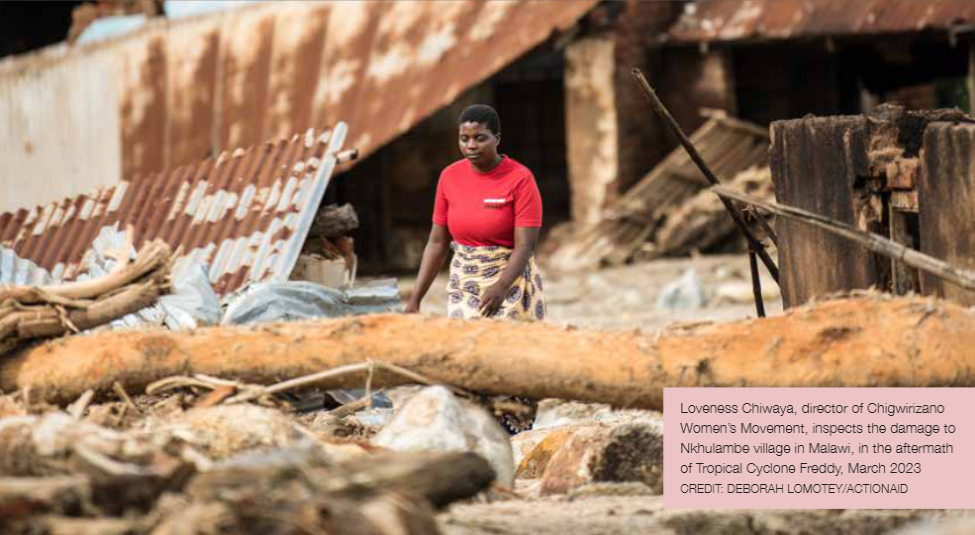
ActionAid describes a cycle that can keep tightening. A storm destroys roads and homes. A government borrows to rebuild. Repayments restrict what it can invest in protection. The next disaster hits communities still exposed, creating another need to borrow.
The costs also enter homes. When water is harder to find or public services shrink, women and girls often take on more unpaid work, the report says. Families already short of food and income have fewer ways to absorb another setback.
The search for repayment money can create another problem. Governments needing foreign currency may expand fossil fuel exports, the report argues, increasing dependence on industries that contribute to further warming.
Even help labelled “climate finance” can arrive as a loan. Money offered to address the climate crisis then brings another obligation to repay.
Meanwhile, commitments made at international negotiating tables can remain beyond reach at home. Among 25 countries with comparable data, combined climate budgets covered only about a quarter of the estimated costs of plans governments intended to finance themselves.
Those are their “unconditional” commitments: the actions they plan to undertake without depending on additional international support.
The comparisons cannot establish how much of every funding gap debt alone caused. Available data differ between countries, and the report acknowledges that there is no universally accepted method for costing national climate plans.
Such changes could give governments more room to invest in protection and recovery. Whether families benefit would depend on how that room is used: which services receive funding, whether projects work, and who they reach
For the Chitungus, the need described in the report is immediate: water to grow food again. The terms agreed by governments and creditors help shape what support a country can provide. Their consequences reach beyond government accounts, into the choices available to families facing a failed harvest. The test is whether that support arrives in time to give the next maize crop a chance